Young ESOMAR Society Award
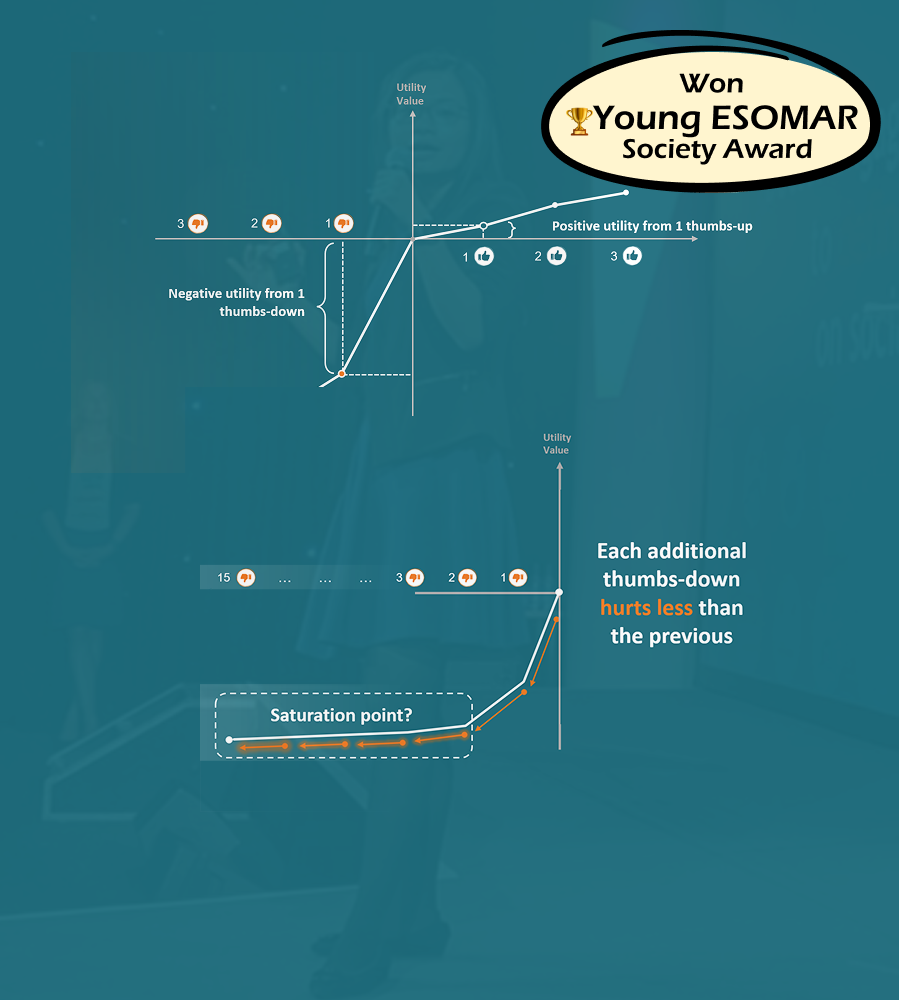
This groundbreaking research used discrete choice modeling to quantify the relative value of different social media reactions, winning the Young ESOMAR Society Award 2019 at the ESOMAR Congress.
Task
Designed and executed a conjoint experiment to quantify the emotional value of social media reactions using discrete choice modeling
Our research revealed several groundbreaking insights about how users perceive and process social media reactions:
- One “Love” reaction equals approximately 3.5 “Like” reactions in emotional value, suggesting that more expressive reactions carry significantly more weight
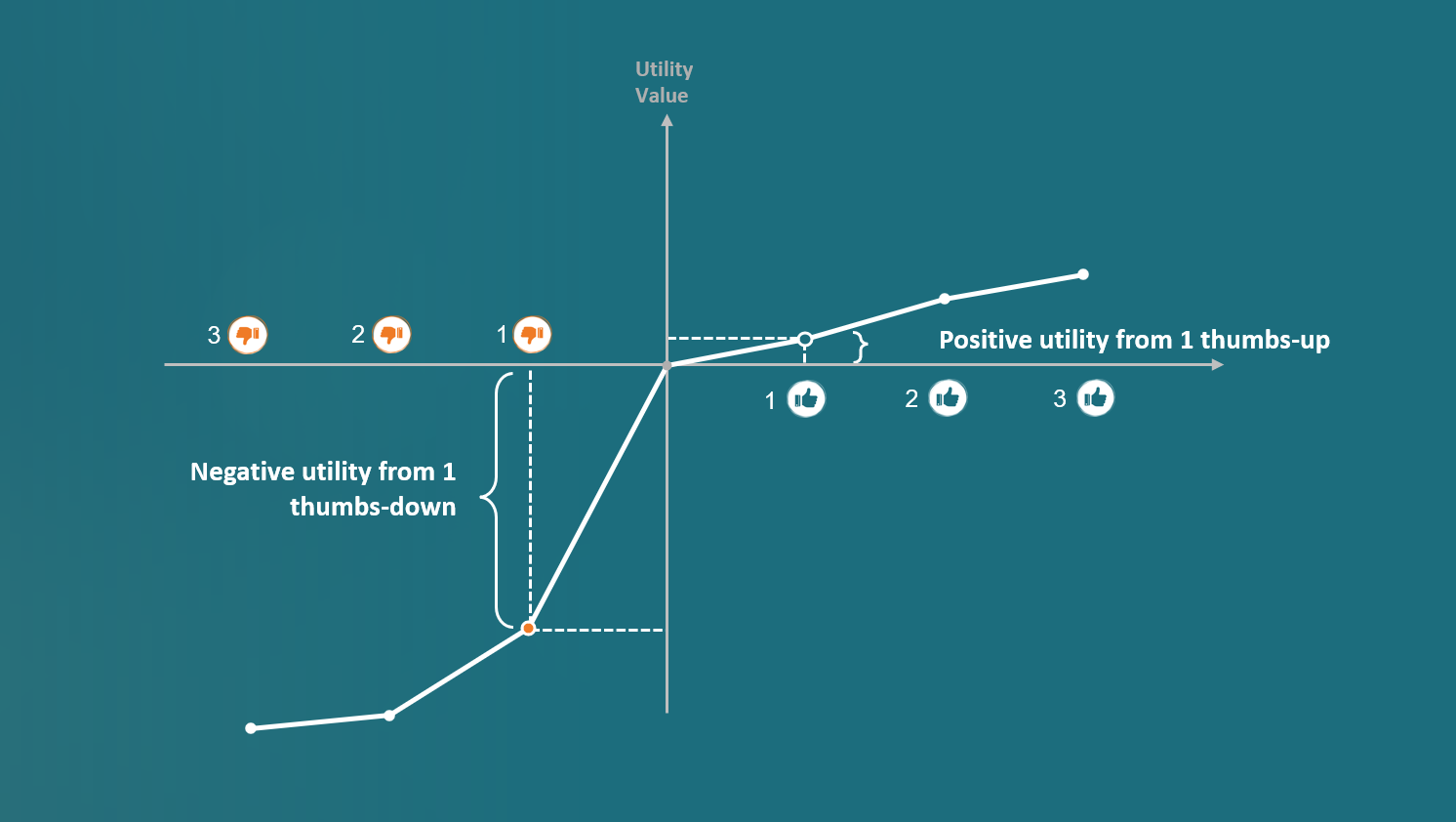
- A single “Thumbs Down” reaction requires 9.7 “Like” reactions to offset its negative impact, demonstrating the disproportionate impact of negative feedback
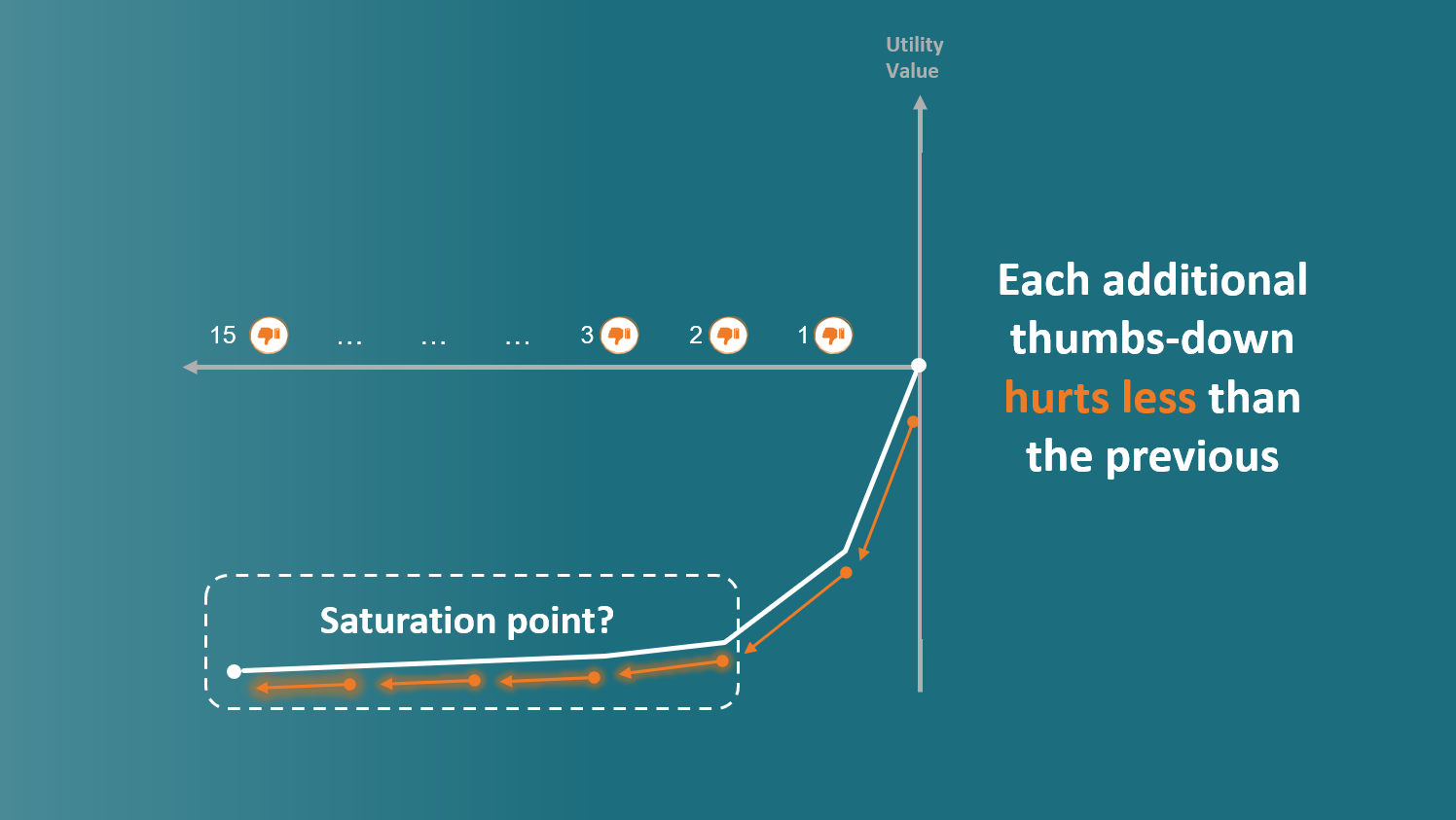
- The impact of negative reactions follows a logarithmic curve, showing diminishing impact over time – similar to psychological habituation
- Context matters: reactions have different emotional impacts based on post content (e.g., personal achievements vs. casual updates)
The findings challenge current social media metrics that treat all reactions equally
The study employed a conjoint experiment (discrete choice modeling) with 200 US respondents. Participants were presented with varying combinations of thumbs up, thumbs down, and love reactions, and asked to evaluate which combination would make them feel best if received on their social media post.
Our research revealed two fascinating psychological phenomena:
- Asymmetric Impact: The negative emotional impact of a thumbs down is dramatically stronger than the positive impact of a thumbs up
- Emotional Desensitization: As the number of negative reactions increases, their marginal negative impact decreases
This research challenges the conventional method of measuring social media engagement by simply summing up reactions. Key implications include:
- Need for weighted engagement metrics that account for reaction types
- Importance of considering post context when interpreting negative reactions
- Value of segmenting reactions by demographics and audience type
- Potential for creating more nuanced social media success metrics