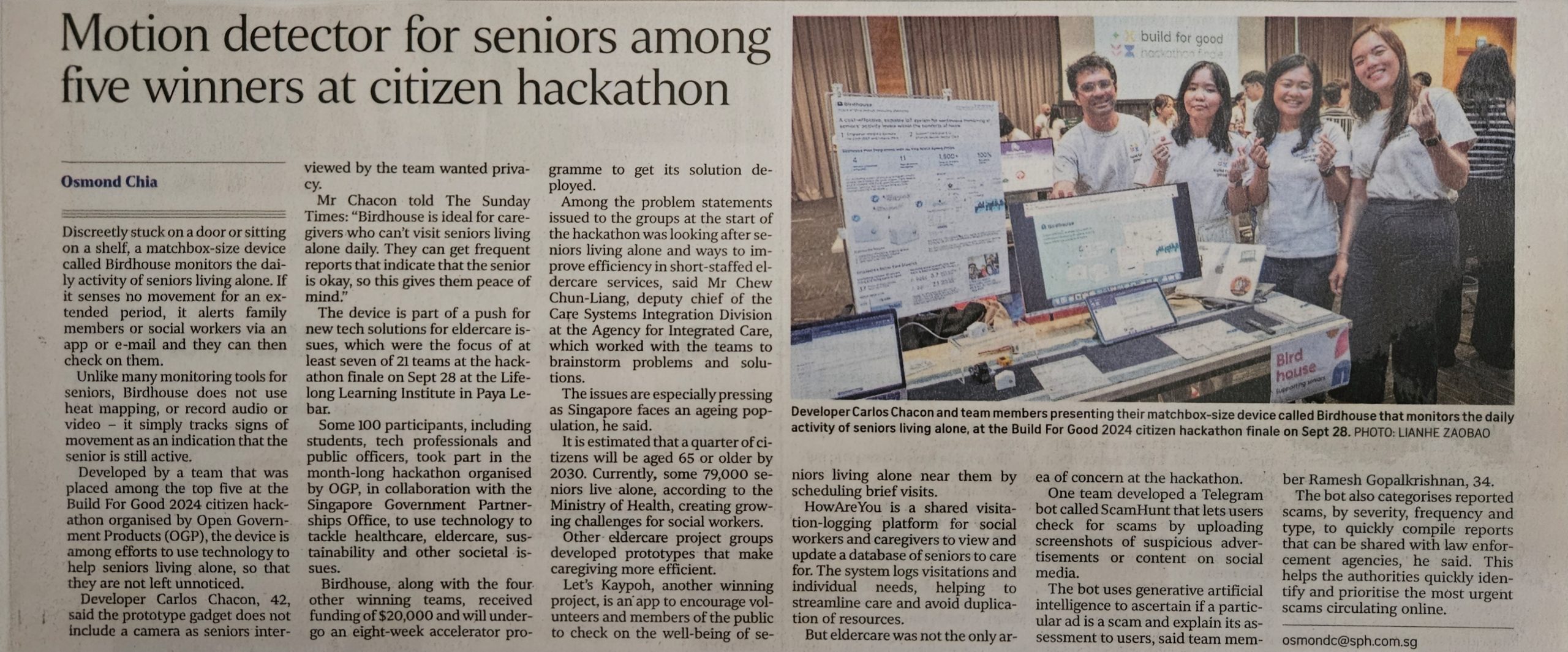
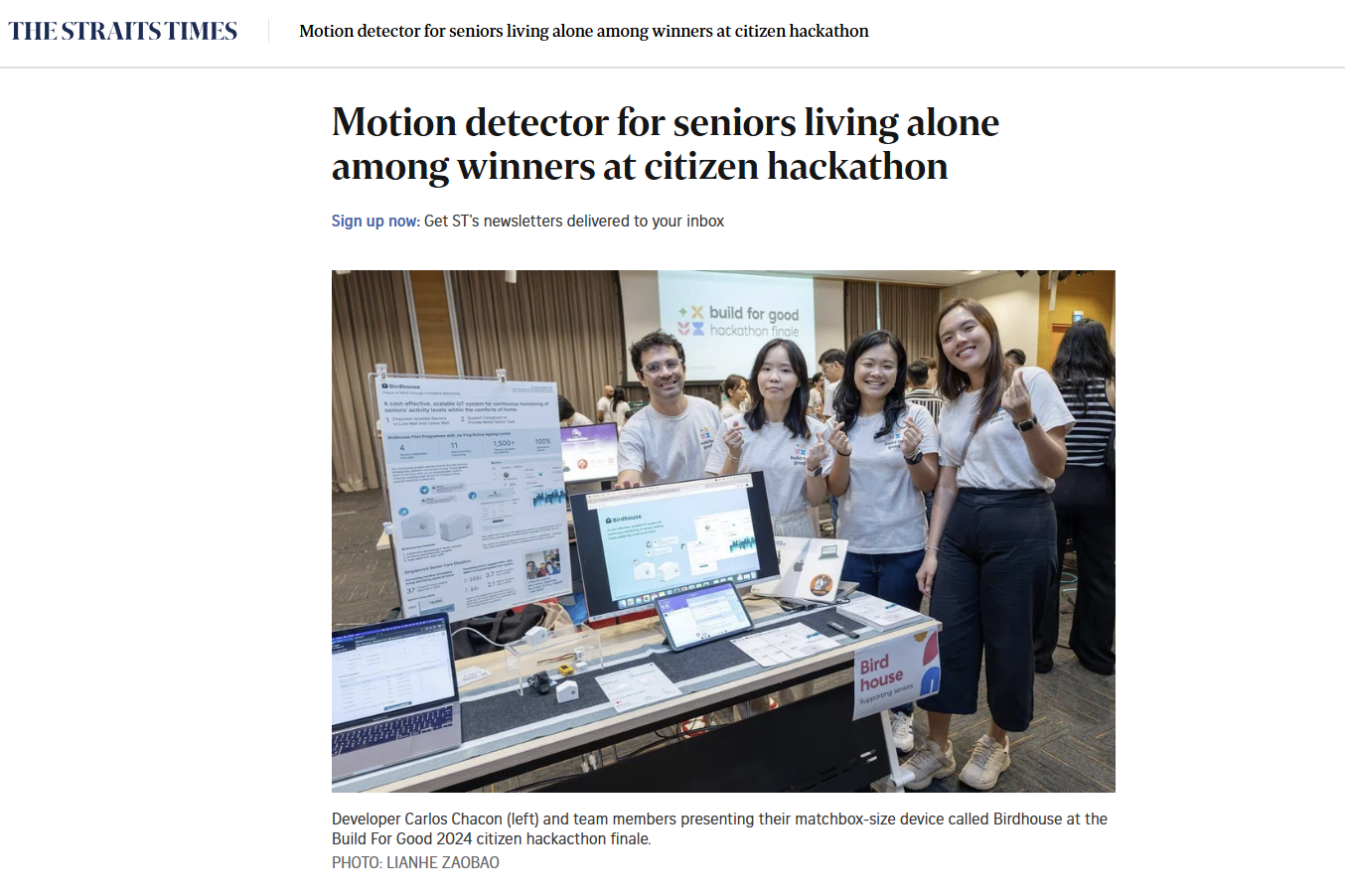
Birdhouse: Data-driven Senior Care Monitoring
Led the data architecture and analytics for Birdhouse, a winning solution at Build For Good Hackathon that addresses unnoticed senior deaths in Singapore through IoT-based monitoring.
Task
Designed and implemented an end-to-end data infrastructure for real-time senior monitoring, integrating IoT sensor data with predictive analytics.
Singapore faces a critical challenge with its aging population. By 2030, 1 in 4 citizens will be aged 65+, with a projected 83,000 seniors living alone – a nearly 6x increase from 2000. In 2023 alone, 37 cases of unnoticed senior deaths were reported, highlighting an urgent need for better monitoring solutions.
The current ecosystem, including Active Aging Centres (AACs) and volunteer programs, struggles with limited resources and fragmented communication systems.
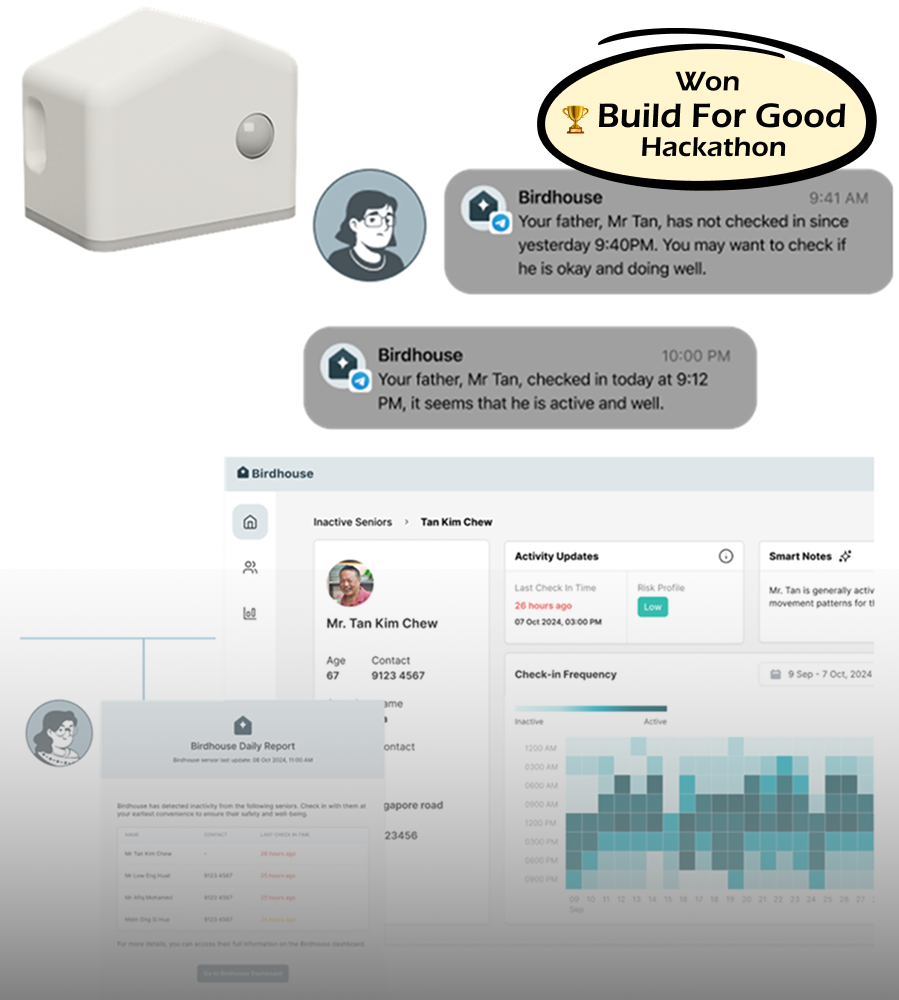
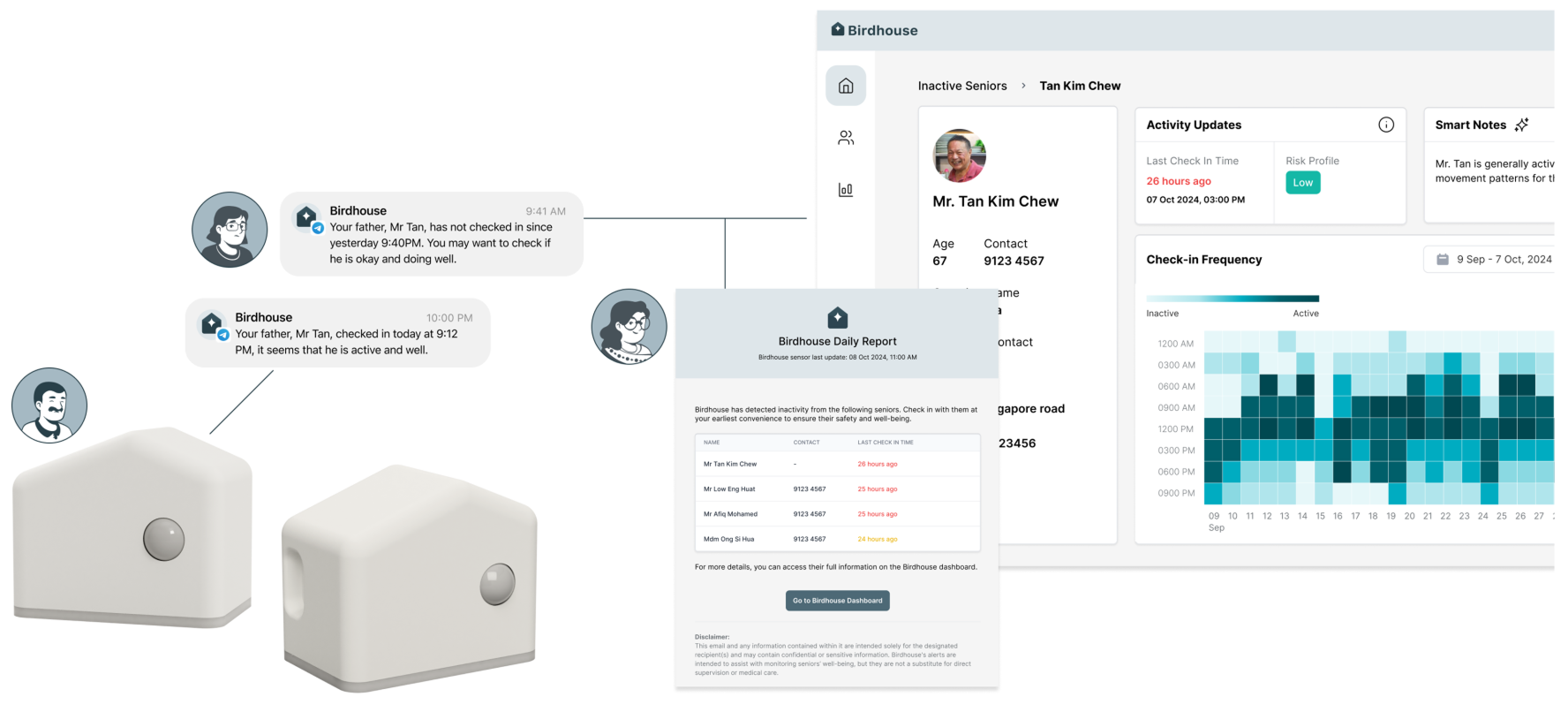
Birdhouse is an innovative IoT-based monitoring system that uses motion sensors to track senior activity patterns and alert caregivers of potential emergencies. As the Data Engineer / Architect on the team, I led the development of a comprehensive data infrastructure that processes real-time sensor data and transforms it into actionable insights for caregivers.
The heart of our solution lies in its data architecture. I designed a PostgreSQL database optimized for time-series IoT data, implementing efficient data partitioning for historical pattern analysis. Using Python, I developed robust ETL pipelines that handle sensor data ingestion, cleaning, and validation.
- Designed and implemented PostgreSQL database architecture
- Created interactive Tableau dashboards
- Developed data pipeline connecting IoT sensors
- Conducted user research
System Architecture
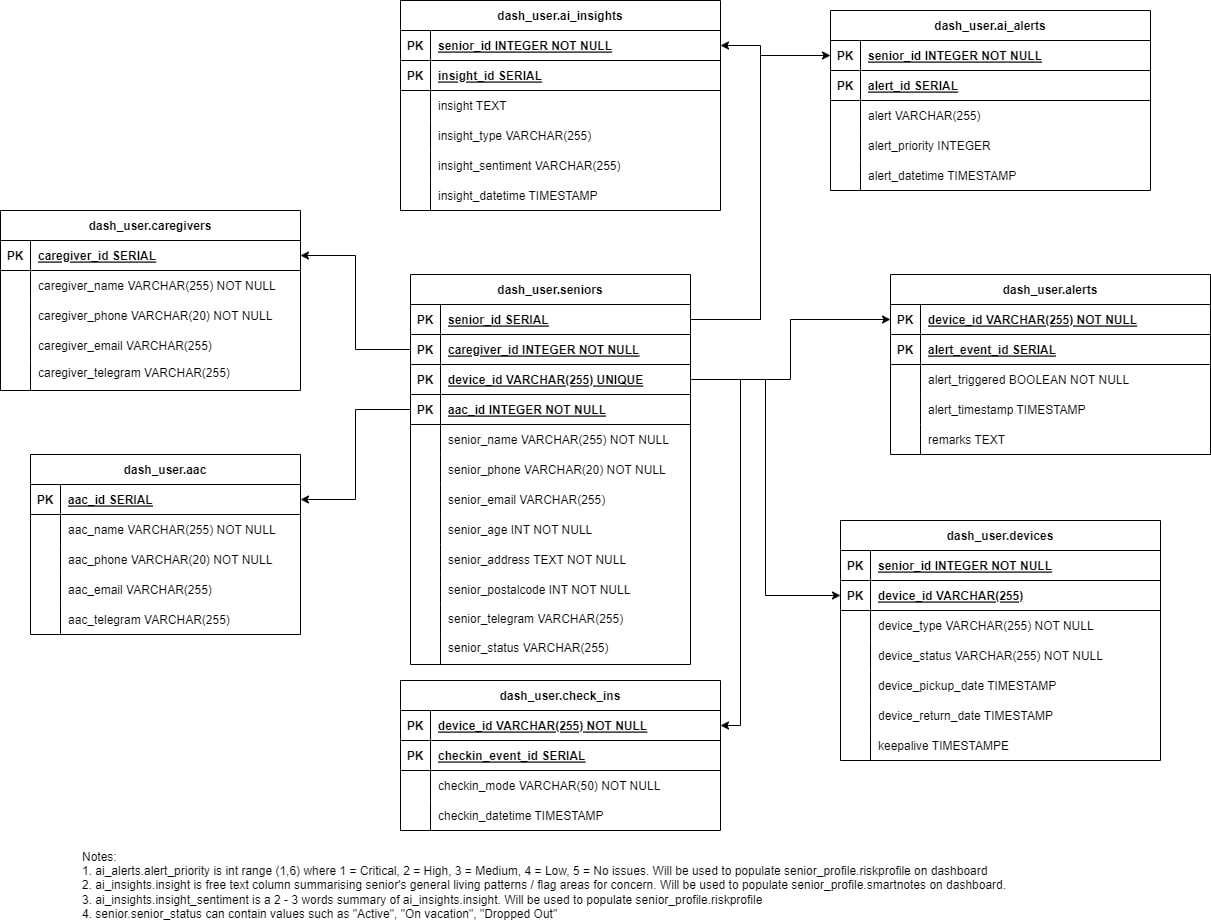
The data model centres on the seniors table, which connects outward to four key domains: devices (IoT sensor hardware), check-ins (raw activity data from sensors), AI insights (pattern analysis and sentiment), and alerts (triggered notifications to caregivers and AAC staff). I designed the schema to separate real-time event data (check-ins, alerts) from derived intelligence (AI insights), so the pipeline can process raw sensor data without blocking the analytics layer
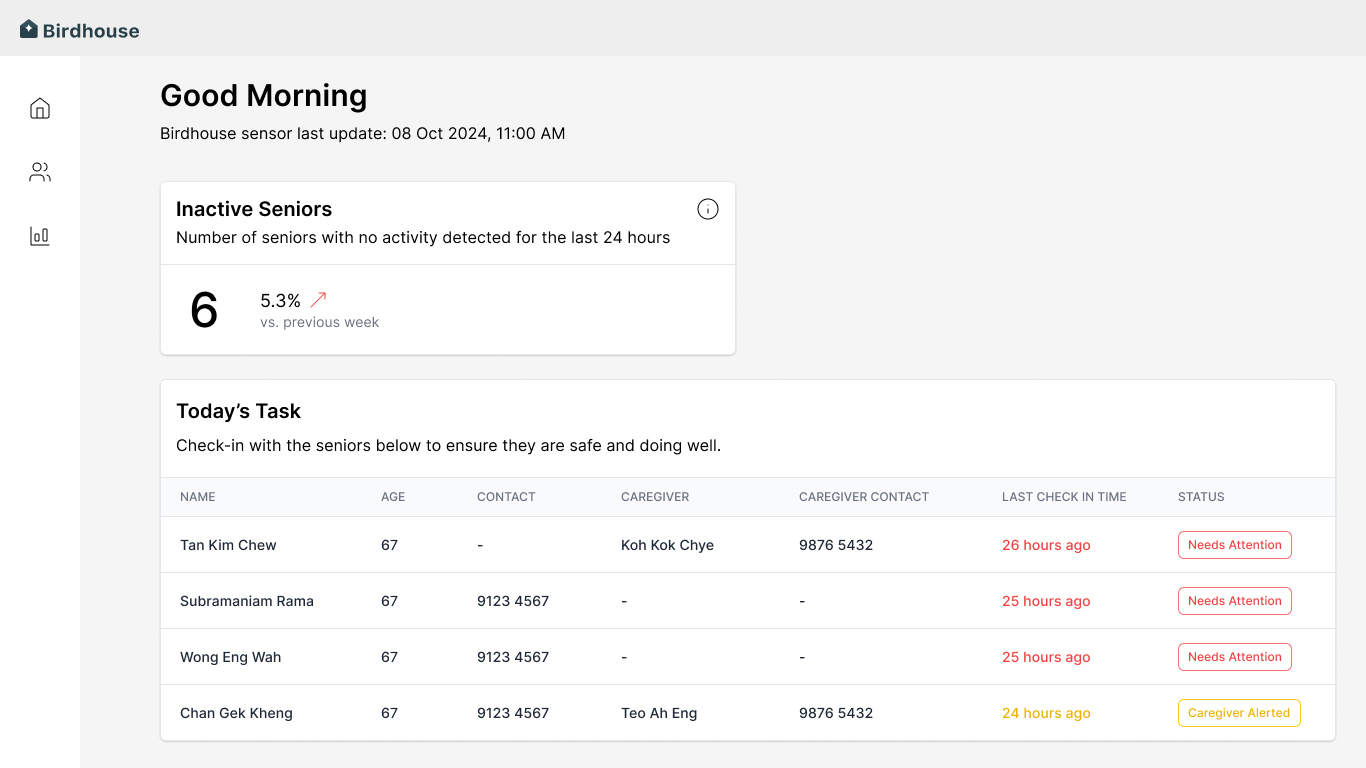
Caseload Overview – Main Dashboard
The main dashboard answers the first question every AAC staff member has when they start their shift: who needs attention right now? It surfaces seniors with no detected activity in the last 24 hours, sorted by urgency: ‘Needs Attention’ (no check-in, caregiver not yet contacted) versus ‘Caregiver Alerted’ (notification already sent).
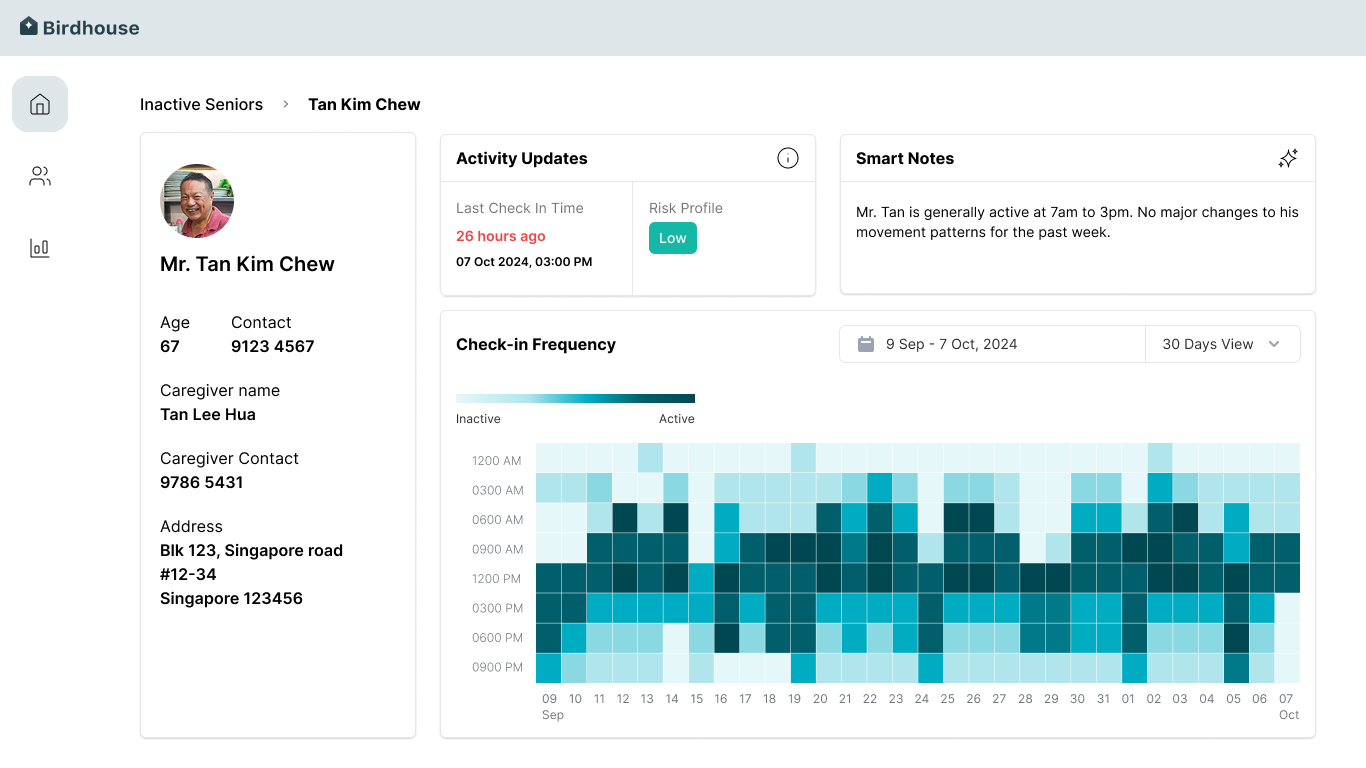
Caseload Overview – Individual Senior Profile
Drilling into an individual senior reveals their activity pattern over time. The check-in frequency heatmap shows hourly activity across days. Darker blocks indicate more movement detected by the IoT sensor. Staff can quickly spot anomalies: a senior who’s normally active by 7am but shows no movement by 10am triggers an orange alert. The Smart Notes panel uses AI to summarise the senior’s general patterns in plain language (e.g., ‘Sleep duration has been 7-8 hours on average’), giving staff context without requiring them to interpret raw data
Understanding our users was crucial for success. we conducted extensive interviews with seniors and AAC staff to understand their workflow challenges. These insights informed the creation of data-driven personas and guided our dashboard design.
The system successfully monitored 4 seniors during pilot phase, collecting over 1,500 check-ins across 11 days. Active Aging Centre staff reported significant workflow improvements and are planning to expand to 50 more seniors.